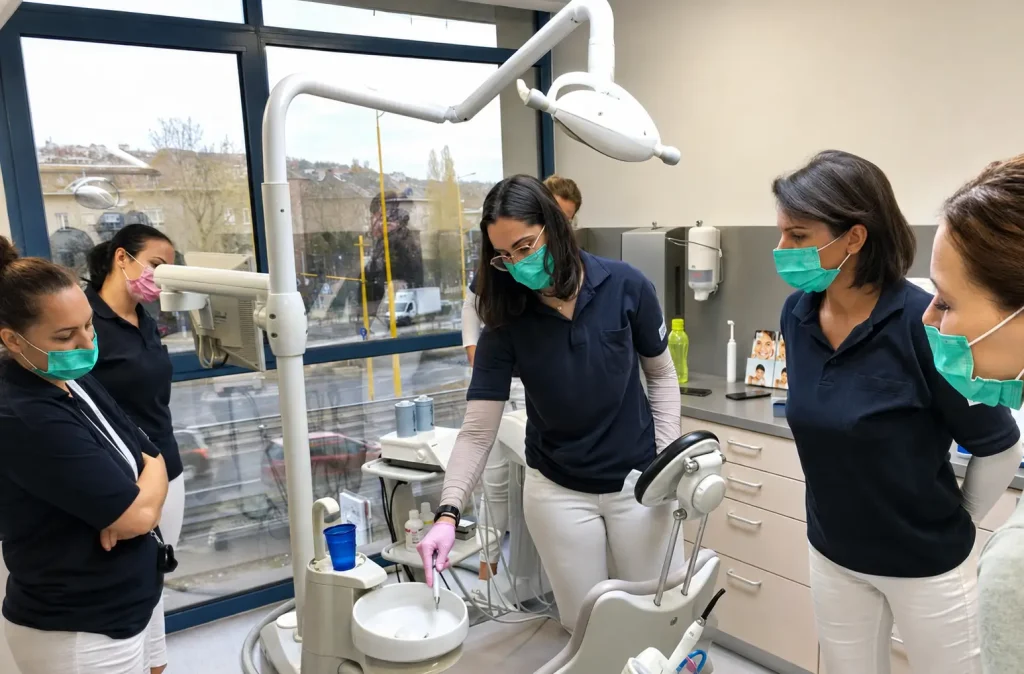
It’s a fair thing to wonder before you book a flight for dental work. Is this a well-worn path, or would I be one of the first to try it? The truth is simple. Dental travel to Hungary is one of the biggest patient trends in Europe. UK patients make up a big share of it.
The headline numbers
No single body tracks “dental tourists” in an official way. So figures vary a bit by source. Still, most studies point to the same rough picture.
| Fact | Figure |
|---|---|
| UK residents who travel abroad each year for dental work | Over 67,000 |
| Share of those UK patients who pick Hungary | Around 47% |
| Foreign patients treated in Budapest each year, all countries | 60,000–70,000 |
| Share of Budapest’s foreign patients who are there for dental work | Roughly 70–80% |
| Typical saving vs UK private prices | 50–70% |
Put together, this points to one clear thing. More UK dental patients choose Hungary than any other single country. Tens of thousands of Britons make the trip each year, just for treatment.
What UK patients actually get done
UK dental trips to Hungary aren’t all about one quick job. The rough split looks like this:
- Implants and oral surgery — the biggest group, often cited near 40–45% of UK cases
- Crowns, bridges, and veneers — a large second group
- Dentures and full-mouth work — smaller, often older patients with more complex needs
- Cosmetic-only work, like whitening — fairly rare among UK dental travellers
This split makes sense once you look at the money. Implants and full-mouth work cost the most in the UK. So that’s where a trip abroad saves the most. Often the gap is £15,000 at home versus £6,000–£7,000 in Budapest for similar All-on-4 work.
Why the short flight matters more than people think
Budapest is about two to two and a half hours from most UK airports. There are direct flights from London, Manchester, Birmingham, and Glasgow. That’s about the same as flying to southern Spain.
For implants, this really matters. Most implant plans need two trips, spaced a few months apart, to let the site heal. A short, cheap flight isn’t a small perk here. It’s often what makes the whole plan work at all.
A word on the numbers
It’s fair to say the data isn’t perfect. There’s no single official list of “dental tourists.” Some older studies get reused without fresh checks. But one thing stays the same across every source. Hungary, and Budapest in particular, treats more UK dental patients than any rival spot in Europe. The trend has grown steadily for two decades, not spiked once and faded.
Frequently asked questions
Is Hungary the top pick for UK dental travellers?
Based on the data we have, yes. Close to half of UK patients who travel abroad for dental work pick Hungary. That’s more than any single rival country.
What do most UK patients get done in Hungary?
Implants and oral surgery make up the biggest group. Crowns, bridges, and veneers come next. Full-mouth work and dentures are also common, often with older patients.
How long is the flight from the UK to Budapest?
Around two to two and a half hours from most major UK airports.
Want to know what your own treatment would cost, if you made the trip? Get a free, no-obligation quote from CosmoDent before you decide anything.